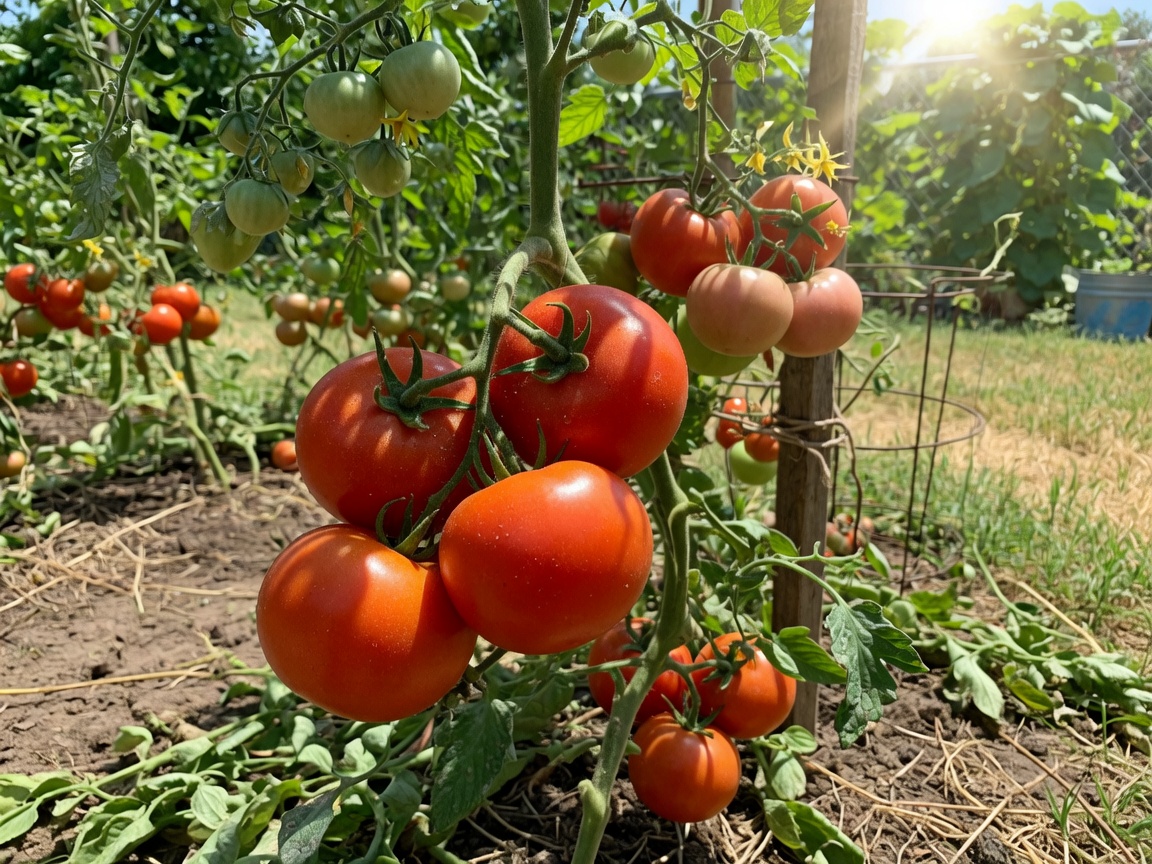
The short checklist
- When: Transplant after frost risk drops - often mid/late March into April. Protect late cold snaps.
- Sun: Full sun, 8+ hours.
- Soil: Raised bed with compost. Mulch thick once soil is warm.
- Water: Deep and steady. Wild dry/wet swings invite blossom-end rot.
- Feed: Tomato food at planting; do not pure-nitrogen into a leaf jungle.
- Heat tip: Heat-tolerant/set varieties for summer carry. Cherries often forgive more.
How to actually do this
Buy sturdy starts. Cage on day one. Plant deep, water in, mulch. Water the soil, not a daily leaf shower. Plant early enough to bank spring fruit, and pick heat-set types if you want summer production. Some varieties stop setting in extreme heat - that is temperature, not a personal attack.
Harvest at full color. Do not refrigerate ripe fruit unless you enjoy sad flavor.
Top ways people mess this up
- Late plantings with only cold-climate heirlooms through August.
- Inconsistent watering.
- Flimsy cages that flop when fruit loads.
Field notes
- Fruit set fails when temps stay extreme - heat-set cultivars are a genotype choice, not snobbery.
- Early spring plantings that fruit before peak heat are a legitimate Dallas strategy.
- Even moisture beats eggshell folklore for blossom-end disorders.
- Spider mites love hot, dry, stressed canopies - irrigation is pest management.
- Indeterminates need real vertical engineering; heat multiplies water demand.
Crop biology
Solanum lycopersicum in humid subtropical heat: flowering can continue under stress while pollen viability and set decline at high temperatures. Succeed with (1) early production windows, (2) heat-tolerant genetics, (3) consistent irrigation and mulch, (4) airflow against foliar disease in humid spells. Cherries and many hybrids outperform fussy long-season heirlooms in July.
Failure mode
Blaming fertilizer for heat-related blossom drop is how you grow taller failure. Read temperature first.
Sunlight
Full sun, 8+ hours. Afternoon shade cloth (30-40%) can reduce stress in peak heat. Reflective walls help early spring and can cook containers in August.
Soil
Fertile, drained raised media; compost; mulch after soil warms. Rotate off other solanums when possible. Clay in-ground only if amended and ridged for drainage.
Irrigation
Deep irrigate to wet 8-12 inches; in peak heat often 2-3 times per week or drip totaling deep wet. Uniformity reduces BER and cracking. Morning preferred. Containers may need daily water.
Lab note: Noon sprinkler cosplay that only wets leaves is not a root-zone event.
Fertilizer
Moderate N at establishment; ease pure vegetative N after fruit set; maintain overall balance and K. Side-dress on true hunger, not heat wilt.
Dallas / North Texas timing
- Start indoors: 6-8 weeks before plant-out if growing from seed.
- Transplant: after frost risk - often mid-March to April; protect late cold.
- Harvest: late spring through fall depending on variety and care.
- Summer: heat-set types, mulch, consistent water, optional shade cloth.
Training and disease hygiene
Cage/stake at planting. Strip soil-touching leaves; open canopy for airflow. Remove diseased tissue. Harvest ripe fruit promptly in stress periods.
Pests and disorders
Hornworms, spider mites, aphids, stink bugs, fungal leaf spots. Culture and water first. See pests.
Harvest
Full color for type; cool room storage; avoid fridge when possible. Keep picking to encourage set when temps allow.
Unit close
Early window + heat-set genetics + mulch + even water + real cages. That is tomato competence in Dallas.