The short checklist
- Zone: Roughly USDA 8a/8b—mild winters, savage summers.
- Frost (fuzzy): Last spring frost often mid-March; first fall frost mid/late November. Your yard may vary.
- Two seasons: Cool crops spring + fall. Heat crops late spring through summer.
- July–August: Survival mode for many plants. Okra laughs; lettuce does not.
- Sun: You have plenty. Shade cloth can save afternoon burn on tender crops.
- Water: Heat without water is jerky. Plan irrigation before the heat dome RSVPs.
Coach talk
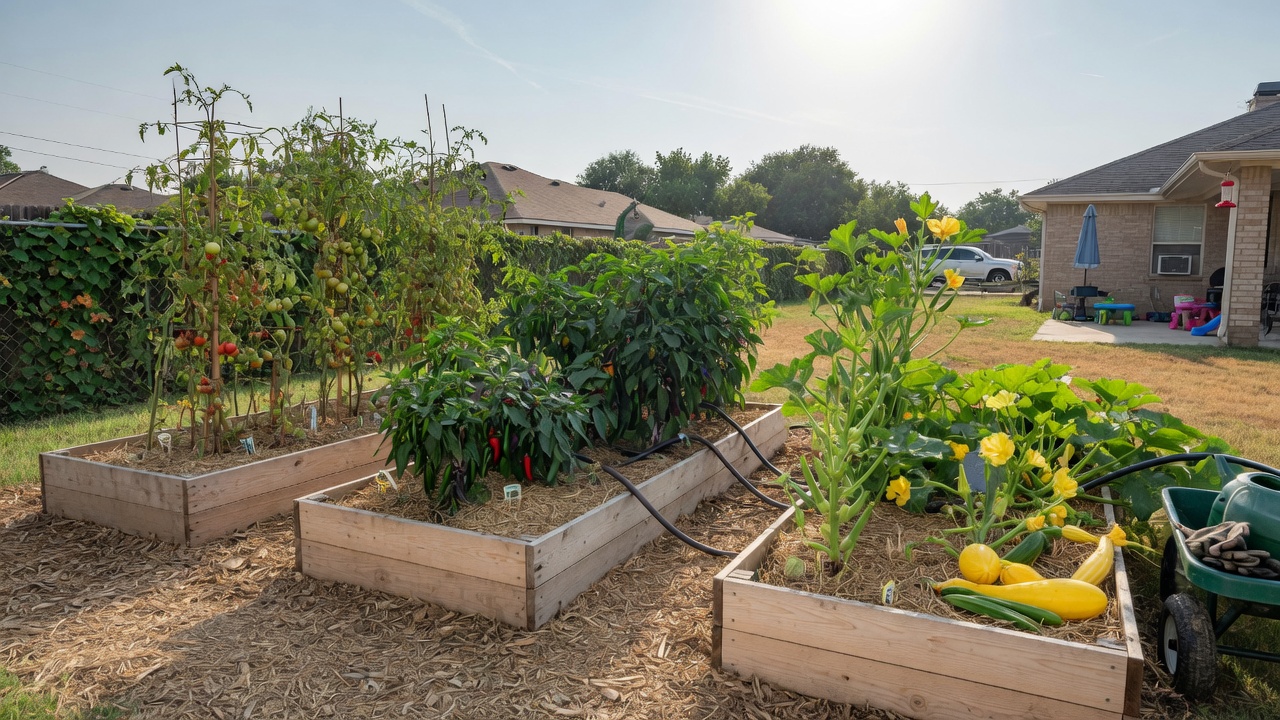
Dallas is not “year-round tropical gardening.” Winter is mild enough for collards and onions; summer is a character test. If you plant spinach in June because a national blog said “summer salads,” the pavement will grade your homework. Grow tomatoes, peppers, okra, squash, and southern peas when it’s hot. Grow greens and alliums when it cools off. Afternoon shade cloth is not weakness—it’s how basil survives July without becoming compost perfume.
Climate crimes
- One spring planting and nothing for fall—wasting half the year.
- Expecting spring tomatoes to keep pumping through 105°F without heat-set varieties or shade strategy.
- Ignoring winter production because “gardening is a summer hobby.”
Field notes
- Hardiness zones answer winter lows—not whether tomatoes set fruit at 95°F nights. Heat-set genetics and microclimate matter.
- Blackland clay + heat = water stress even after “it rained last week.” Probe the root zone.
- Spring is short and sharp; fall is an underrated second spring for brassicas and alliums.
- Reflected heat from walls/driveways cooks containers faster than in-ground beds.
- Shade cloth (30–40%) over afternoon-exposed beds can save yield on peppers/tomatoes in peak heat.
Working model
North Texas sits in a humid subtropical pattern with continental heat spikes. Winters allow cool-season production most years; summers favor crops evolved for heat (okra, southern peas, sweet potatoes, many peppers). Tomato production often benefits from early spring plantings that fruit before peak heat, plus heat-tolerant cultivars for summer carry.
Seasonal table
| Window | Priority | Notes |
|---|---|---|
| Feb–Apr | Onions, cool greens starts, early tomatoes under protection | Watch late cold snaps |
| Apr–Jun | Tomatoes, peppers, cukes, squash, beans/peas | Main warm establishment |
| Jun–Aug | Okra, sweet potatoes, southern peas, heat survivors | Irrigation is non-negotiable |
| Sep–Nov | Fall collards, onions (sets/seeds timing), cool crops | Second season—use it |
| Dec–Jan | Collards, planning, garlic if planted fall | Protect on rare hard freezes |
Unit close
Two seasons, one furnace. Schedule cool crops on the shoulders and heat lovers through the middle—or garden three months and call it a lifestyle.