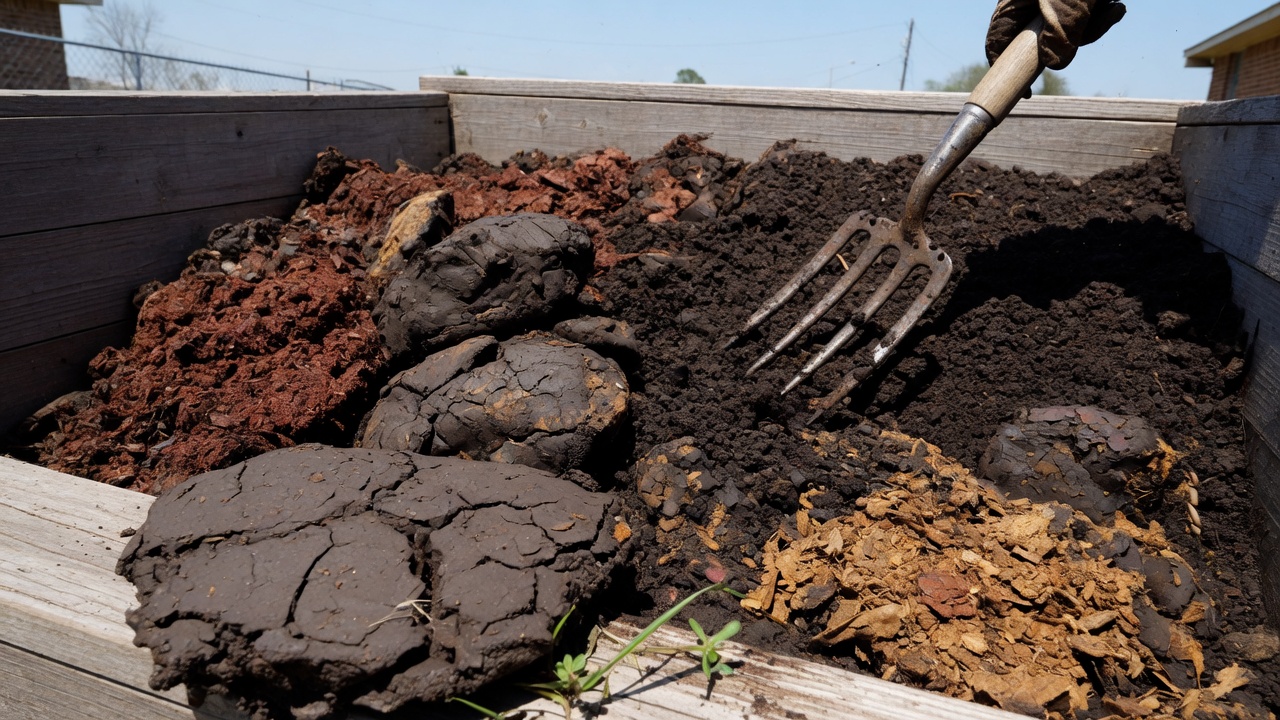
Clay is sticky, strong, and judgmental
It holds nutrients and water—and holds roots hostage when it seals shut. Raise beds, add organic matter, and stop digging when it’s soup.
- Use raised beds filled with mixed soil/compost if native clay wins fights.
- Add compost every year—it’s the main clay softener that actually helps.
- Mulch thick in summer so the surface doesn’t bake into pottery.
- Don’t till wet clay into bricks. Wait until it crumbles.
- Onions and roots need fluffier profiles—don’t plant into clods and pray.
If water pools for days after rain, fix drainage before buying more plants. Plants are not scuba gear, even in Texas.
Soil sins
- Planting into pure sticky clay and blaming the seed company.
- Bare soil in August—hello, crust and evaporation.
- Fresh manure right before planting heat crops into a heat wave (burn + smell theater).
Field notes
- Blackland prairie clays: high shrink-swell, high CEC, poor tilth when mismanaged. Structure first.
- Organic matter is the long game; gypsum helps some sodic situations—test before cult rituals.
- Raised beds warm earlier in spring and improve drainage after gully washers.
- pH often near neutral to alkaline in urban fills—iron chlorosis shows on some ornamentals; veggies usually cope with compost-rich media.
- Match fertility to crop: leafy collards want N; fruiting tomatoes want restraint after set; legumes don’t need corn-level N.
Build targets
For annual veg beds: loam/compost blends with enough mineral fraction to not collapse into peat soup. Top-dress compost yearly. Mulch 2–3" in heat season. Deep infrequent irrigation once structure exists—clay stores water if roots can enter it.
| Crop guild | Soil note |
|---|---|
| Tomatoes / peppers / eggplant | Fertile drained raised media; mulch; rotate solanums when possible |
| Cucurbits | Rich, warm, well-drained; wide footprint |
| Onions | Loose, fertile, weed-free; avoid fresh manure |
| Okra / southern peas / sweet potato | Warm soil; decent drainage; moderate fertility |
| Collards | Fertile, moisture-retentive; steady N |
Unit close
Raise, amend, mulch, don’t work wet clay. Chemistry will not redeem a sealed, cracked prairie brick without organic matter and structure.