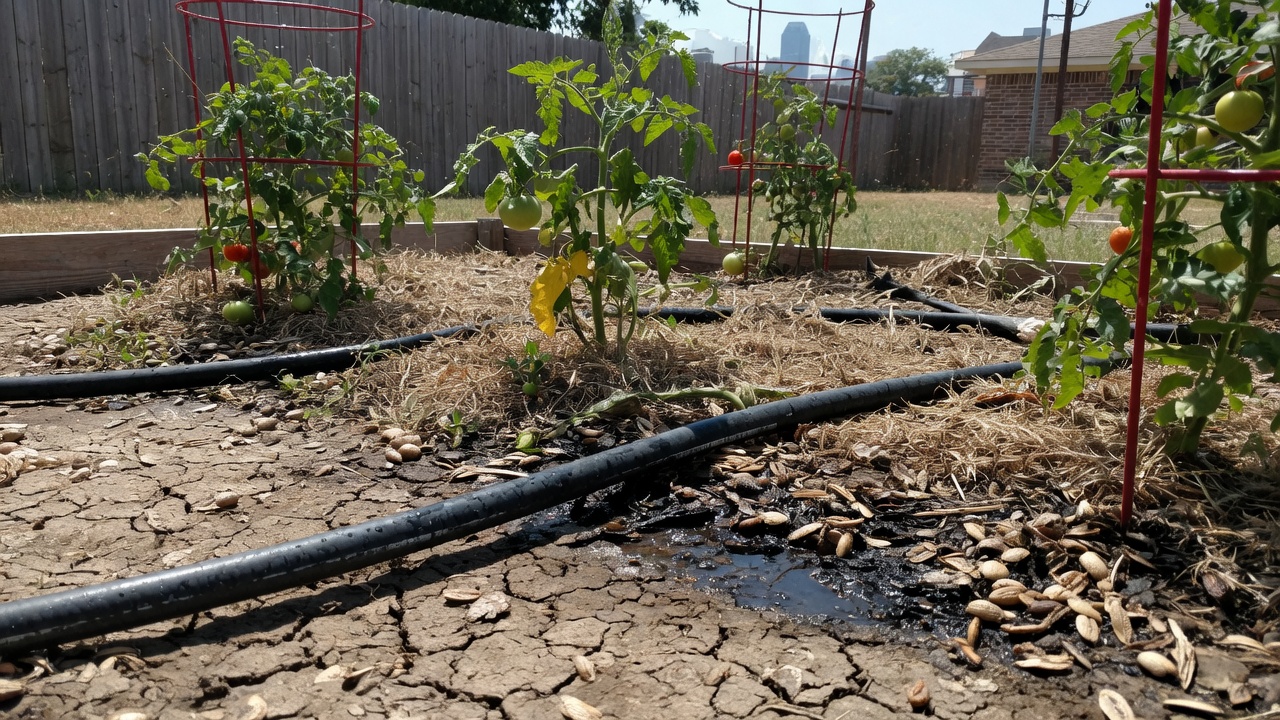
- Water early morning when you can—less evaporation, happier leaves.
- Deep soak less often beats daily five-second sprinkles.
- Mulch 2–3" like you mean it. Bare soil in August is a crime scene.
- Finger test: dry two knuckles down → water. Still damp → wait.
- Pots dry out insanely fast—check daily in heat waves.
- Drip/soaker under mulch saves water and your evenings.
Wilting at 3pm can be temporary heat wilt; still-wilted at dusk means you have a real problem. Learn the difference before you flood a plant that was just being dramatic at high noon.
Watering fails
- Noon sprinkler cosplay that wets leaves and evaporates before roots notice.
- Ignoring restrictions and runoff—deep rare soaks still win.
- New transplants without extra attention the first two weeks.
Field notes
- ET (evapotranspiration) in North Texas summers is brutal—design systems for peak demand, not April vibes.
- Clay stores water if structure allows entry; sealed crusts shed water like a parking lot.
- Even moisture reduces blossom-end rot dynamics on tomatoes/peppers more than eggshell folklore.
- Overhead irrigation raises disease risk and waste; drip + mulch is the adult configuration.
- Stage water by crop: cucurbits and tomatoes at fruit fill are high demand; established okra is tougher.
| Crop group | Hot-weather starting point |
|---|---|
| Tomatoes / peppers / eggplant | Deep 2–3×/week or drip daily short cycles totaling deep wet |
| Cucumbers / zucchini | High demand at fruiting; never chronic drought |
| Onions | Steady while bulbing; ease as tops fall if curing |
| Okra / southern peas | Regular but more drought-tolerant once established |
| Sweet potatoes | Steady early; don’t drown late if rot risk |
| Basil / collards | Even moisture; collards also in cool season |
Unit close
Mulch, drip, morning timing, probe roots. Heat without water is not toughness training—it’s yield suicide.